When Learn here you sit in a first aid training room for the very first time, manikin on one side and a stack of gauze on the various other, the abstractions that swirl around emergency situations become muscle mass memory. You find out where to put your hands, exactly how tough to press, what to say to emergency send off, and which mistakes to stay clear of when seconds count. The value of a first aid course is not theoretical. It is measured in the tranquility you carry into disorderly minutes, and in the end results that follow.

The actual reasons individuals enlist, and why they stick with it
Most participants stroll into a first aid and CPR course with a work demand or a family members motivator. A brand-new parent wants confidence around choking dangers. A coach needs certification prior to the period begins. A building foreman is responsible for a team spread throughout a busy work site. By the end of a solid program, those checkboxes matter much less than the clear, practiced judgment they acquire. They leave understanding how to size up a scene in three breaths, just how to route spectators, and exactly how to change efficiently when paramedics get here. Those habits, once found out, have a tendency to remain. I have seen former students step in at a farmers' market, at a pool deck, and on a bus, reacting emphatically and buying precious time.
Confidence under stress is an ability you can build
People overstate what they will remember under tension. Heart prices spike, great motor abilities decrease, hearing narrows. The antidote is deliberate technique. Great first aid courses simulate practical stress with timed drills and role-play. You rehearse calling 000 or 911, relocating furniture to develop room for compressions, and making use of an AED with a trembling hand. The first repeatings feel unpleasant. By the third or fourth cycle, you are counting compressions out loud, switching over rescuers at the appropriate mark, and reconsidering for breathing immediately. That rep wires a script you can run when the adrenaline hits.
This is likewise why a CPR correspondence course matters. Standards advance every few years, however more vital than updates are the tune-ups to your technique. I have actually enjoyed experienced personnel drift from the advised compression depth by as high as a centimeter. Over months, bad practices slip in. Brief refresher sessions, usually two to three hours, are enough to fix those drifts and re-anchor your timing and hand placement.
The survival mathematics behind CPR training
Cardiac apprehension is not unusual. Out-of-hospital occasions take place tens of hundreds of times a year in a lot of developed countries. The distinction between receiving prompt chest compressions and waiting two to three mins for the very first push can triple the chance of survival to healthcare facility discharge. Those probabilities do not come from heroics, they originate from normal individuals who start CPR right away and who are willing to utilize the nearest AED.
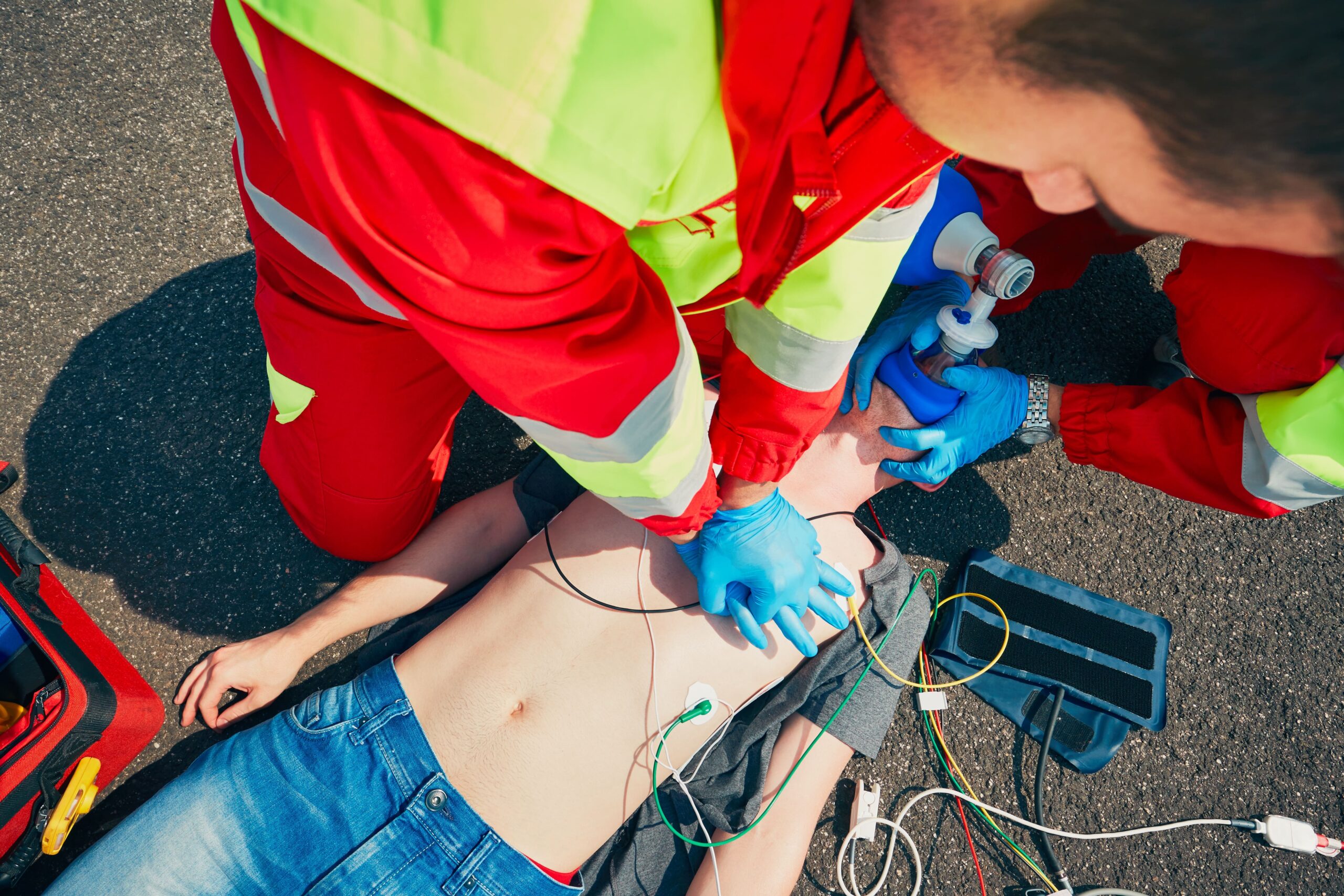
A well-run CPR course boils survival mathematics into actions: acknowledge unresponsiveness, phone call for help on speaker phone, start compressions hard and fast at about 100 to 120 per min, and utilize an AED as quickly as it arrives. You will certainly find out that ideal seal breathing is less essential for many grown-up unexpected heart attacks than continuous, premium compressions. You will likewise discover when rescue breaths issue, like in drowning, pediatric cases, or opioid overdoses.
Beyond the heart: the breadth of first aid that really gets used
People photo CPR when they imagine first aid. In technique, the calls you will actually answer look different. Allergic reactions at an outing, deep cuts from a cooking area mishap, serious asthma on a football pitch, and diabetic hypoglycemia in a workplace are far more common. An extensive first aid course covers these with practical emphasis.
Anaphylaxis is a sprint. You learn to find swelling, hiss, and a quick deterioration that can unfold in minutes. You practice taking an EpiPen cap off without wasting time, press and hold for the complete count, then mark the moment and plan for a second dosage if signs and symptoms return before paramedics show up. For asthma, you will certainly walk through reliever inhaler use with a spacer, why repeated puffs are extra effective than one deep blast, and how to rest the person forward to alleviate breathing.
Bleeding control is tactile. Expect to obtain your hands on proper injury dressings and to really feel the pressure needed to halt a steady circulation. Anticipate to be told to neglect the mess, hold pressure without glimpsing, and to improvisate with a folded tea towel if you are in a home kitchen area instead of a well-stocked facility. For burns, the assistance to cool the HLTAID009 CPR Course Launceston area under running water for 20 minutes is basic, however pupils commonly discover for the very first time not to use ointments or ice, and to remove rings early Canberra First Aid Course prior to swelling makes it impossible.
What a great training day looks like
Many carriers provide combined first aid and CPR courses that combine brief on the internet modules with a concentrated in-person sensible. The on the internet piece helps you absorb the why and the flowcharts at your very own speed. The face-to-face session is where learning sticks. A knowledgeable trainer does more than state steps. They established clear situations, revolve functions, and offer blunt, motivating comments: compressions as well superficial, excellent checking, see your finger positioning on infants.
The best courses maintain teams little enough that you obtain specific adjustments. In a course of eight to twelve, you can anticipate numerous rounds on the manikin, a hands-on AED check, bandaging and sling work, and a couple of practical manuscripts. I favor programs that do short debriefs after each drill. Thirty seconds of reflection concerning what you saw, what you missed, and just how you communicated seals the lesson more than one more pass through a slide deck.
Choosing the right provider without obtaining lost in acronyms
There are plenty of companies trying your interest, from nationwide charities to particular niche clothing branded as First Aid Pro or in a similar way called companies. Many companies and professional regulators care that your first aid certificate is nationally recognized, that the course aligns with current resuscitation standards, which functional assessments are included.
Here is a fast filter I make use of when recommending groups:
- Look for present alignment with your country's resuscitation council assistance, not a generic pledge of ideal practice. Ask concerning instructor-to-student ratio and ensured hands-on time per participant. Verify that the certificate includes both first aid and CPR parts if your workplace calls for both. Check recertification intervals and whether a shorter CPR refresher course is offered to keep abilities current. Read two or three current evaluations that point out situation practice or instructor responses, not simply "great program."
If the provider can not answer the number of minutes of compressions you will certainly do, or what brand names of AEDs you will certainly handle, maintain shopping.
How this training repays at work
The return on training is much easier to see when it maps to genuine threat. A child care facility needs a greater percentage of team learnt pediatric first aid and CPR due to the fact that the emergency situations they encounter skew towards choking, high temperature seizures, and allergies. A manufacturing plant stresses more regarding lacerations, crush injuries, and chemical direct exposure. A workplace floor still advantages, because fainting, cardiac occasions, and hypoglycemia do not respect work titles.
Beyond the emergencies themselves, educated personnel minimize disturbance. When a person breaks down, you desire someone to examine feedback and breathing, one to call emergency situation solutions with a clear address and entry directions, one to obtain the AED, and an additional to take care of the group and lift. Without training, 5 individuals hover and no person leads. With training, a basic occurrence command arises in the very first ten seconds, and the disorder dampens.
Insurance underwriters inquire about first aid insurance coverage for good factor. Documented training and effectively maintained sets frequently count towards reduced costs. More crucial, they cut the average time to very first treatment. If you preserve a case log, you will see the pattern within a year: faster response, fewer problems, cleaner handovers to paramedics, less lost-time injuries.
The home front: peaceful benefits that matter
Home incidents seldom make the information. A young child bites a grape and coughs it out after two back blows. A companion cuts a hand while cooking and prevents the emergency department thanks to a tight, well-placed dressing. A senior parent misjudges an action, turns an ankle, and take advantage of secure support and a proper cold treatment timetable instead of a hurried, excruciating trip.
Families who share a program typically uncover small however important enhancements. They put their first aid package where it can be reached one-handed. They classify drug clearly. They download and install local emergency apps that send general practitioner place to dispatch and add their structure gain access to code to the family shared notes. They teach older children to call for help and to fetch the kit. These are not grand motions, yet they compound.
The mental health and wellness component is not a nicety
Many extensive first aid courses currently consist of a sector on mental health first aid or a minimum of on severe stress and anxiety response. People envision broken bones, however the event you are most likely to come across in a modern workplace is an anxiety attack, an intense despair action, or an associate in crisis. You can not diagnose. You can steady the room, slow the breathing rate, ask straight but thoughtful inquiries concerning prompt safety and security, and attach the person to expert help.

The most valuable phrase I have actually educated and made use of is straightforward: I am right here, you are risk-free now, breathe with me. Basing methods, like calling five points you see and 4 you can touch, look soft on paper. In a fluorescent-lit conference room with a colleague who can not capture a breath, they are quietly reliable. A strong first aid training program will educate you where your function ends and just how to hand off to proper solutions without leaving the person adrift.
Legal security and obligation of care, demystified
People worry about obligation. In many jurisdictions, Good Samaritan regulations or their matchings secure ordinary rescuers who act in good faith and within their training. If you do refrain anything negligent or willfully irresponsible, the legislation tends to be on your side. That claimed, in work environments you also have a duty of treatment. Training aids you accomplish it. Following your training is a strong protection. Departing wildly is not.
Documentation matters after an occurrence. A quick document of what occurred, what was done, and when it was turned over to paramedics shields you and aids clinicians. Good programs will offer you design templates or at the very least a psychological list for paperwork and for replenishing supplies.
Equipment options: keep it easy, keep it ready
A first aid package is only like its preparedness. I often see overstuffed sets with 3 brands of dressings, ended saline, and a missing pair of shears. Much better to have a lean, checked package and a clearly labeled AED with pads in day and battery examined weekly. In a first aid and CPR course, ask the trainer to walk you through a minimalist set that matches your setting. For a small workplace, that typically indicates nitrile handwear covers in different sizes, assorted adhesive tapes, a few clean and sterile gauze pads, two crepe bandages, a triangular bandage, sticky tape, an aluminum foil blanket, easy saline husks, shears, and an electronic thermostat. Include an EpiPen if your danger account needs it and your policies permit it.
AEDs intimidate until you open the case. Modern devices coach you via the whole procedure with voice motivates, and many devices auto-analyze rhythm with no selections to make. Hands-on exposure in training gets rid of reluctance. When seconds matter, you want your hands to reach for the pads without a dispute regarding which goes where.
Learning for various bodies and contexts
Technique is not one dimension fits all. CPR on a huge, barrel-chested grown-up varies from compressions on a mild teenager. Trainers should educate you just how to change hand placement, how to utilize your body weight to save your wrists, and just how to switch over rescuers successfully. Infant CPR, with 2 fingers or surrounding thumbs and gentle breaths, requires repetition till your muscle memory stops overdelivering air.
Choking methods change with age and condition. Abdominal drives for a conscious, choking adult are not appropriate for a late-term expecting individual or some larger type of body. You will find out to readjust with chest thrusts. You will certainly also learn to change quickly from back strikes to drives and, if the person collapses, to begin compressions while examining the mouth for noticeable blockages between sets.
Remote and high-noise environments include complexity. On a factory floor, you may require to move a sufferer a short distance to leave a hazard before beginning treatment. In a pool environment, drowning resuscitation requires prompt rescue breaths early. These subtleties different checkbox training from genuine competence. If your environment has unique threats, inform your trainer. Good trainers will certainly weave those right into scenarios.
How long your first aid certificate lasts, and how to maintain it alive
Certificates run out for a factor. Abilities fade. As a basic pattern, complete first aid certificates run two to three years prior to renewal is needed, while CPR elements are best rejuvenated every 12 months. Some employers line up refresher cycles with yearly safety days. I recommend much shorter, a lot more frequent CPR training when feasible, with a longer first aid update at the typical interval. Microlearning in between helps. Five-minute videos on opioid overdose reaction, pocket cards with pediatric dosing for epinephrine autoinjectors, and brief drills at group meetings keep expertise warm.
Look out for standard updates. Resuscitation councils issue routine modifications based upon new proof, such as tweaks to compression-to-ventilation proportions in particular setups, or stronger suggestions for bleeding control strategies. A reputable supplier will certainly signal when these modification and will readjust their cpr courses accordingly.
The peaceful management effect
Once someone on a group completes strong first aid training, their habits raises others. They check the AED weekly without being asked. They straighten out the set after a scrape. They lead a fast run-through at the beginning of an occasion: departures right here and right here, AED by the lift, call this number and after that bring me. That readiness is transmittable. I have actually seen cultural shifts begin with 2 personnel who took a first aid pro design training course, returned stimulated, and ingrained brief, sensible safety and security practices into day-to-day routines.
That management also turns up after an occurrence. Debriefing with care, acknowledging what went well and where to tighten up processes, and supporting colleagues that had a hard time with what they saw can avoid the peaceful build-up of anxiety that weakens teams over time. An excellent course designs that tone. It deals with blunders as component of learning, not as pity to hide.
Costs, time, and what to expect from scheduling
Pricing differs by area, provider, and whether the program is public or in-house. A combined first aid and CPR course normally runs half a day to a full day, with mixed versions reducing classroom time by moving theory online. CPR-only sessions can be as brief as a couple of hours. Team reservations bring prices down and make scheduling less complicated around changes. If you run a group, bargain for scenario customization. If your personnel deals with details hazards or works in a special format, a fifteen-minute walk-through of your space prior to the course day can pay off.
Do not allow budget drive you to an all-video training course. Watching an ideal compression on a screen is not training. You need to really feel the chest recoil and listen to the AED triggers in your own voice context. Demand useful assessment as part of the first aid certificate, not a checkbox test alone.
When the difficult phone call arrives
I remember a wintertime morning in a tiny area health club. A guy in his fifties sagged on a rowing maker. A fitness instructor with 6 months on the job, fresh from a cpr training weekend break, identified agonal breaths, sent a person for the AED, and began compressions on the floor in between rowing devices. By the time paramedics arrived, the AED had actually suggested and supplied one shock, and compressions had actually never ever picked up more than 10 seconds. That man strolled back into the gym eight weeks later.
Not every story ends that way. In some cases you do whatever right and the outcome is not what you hoped. Training helps you recognize that the care you provided was prompt and appropriate. It anchors you when you make the telephone call to a family, when you write the incident note, and when you show up for work the next day with a steadier hand.
Taking the next step
If you have been implying to get educated, choose a course this month. If it has been more than a year since your last course, publication a CPR refresher course and put the certificate on your schedule so it does not lapse. If you handle people, routine a mixed first aid and CPR course and turn team so your insurance coverage is genuine, not academic. Walk to your AED today and check the sign. Open your first aid set and make certain the shears are there. None of this calls for heroism. It calls for objective and two to 8 hours of your time.
Training turns spectators into efficient first -responders. It offers you a prepare for the worst day a person near you may have. And it changes vulnerability with action, which is a present to the individual in front of you and, quietly, to yourself.